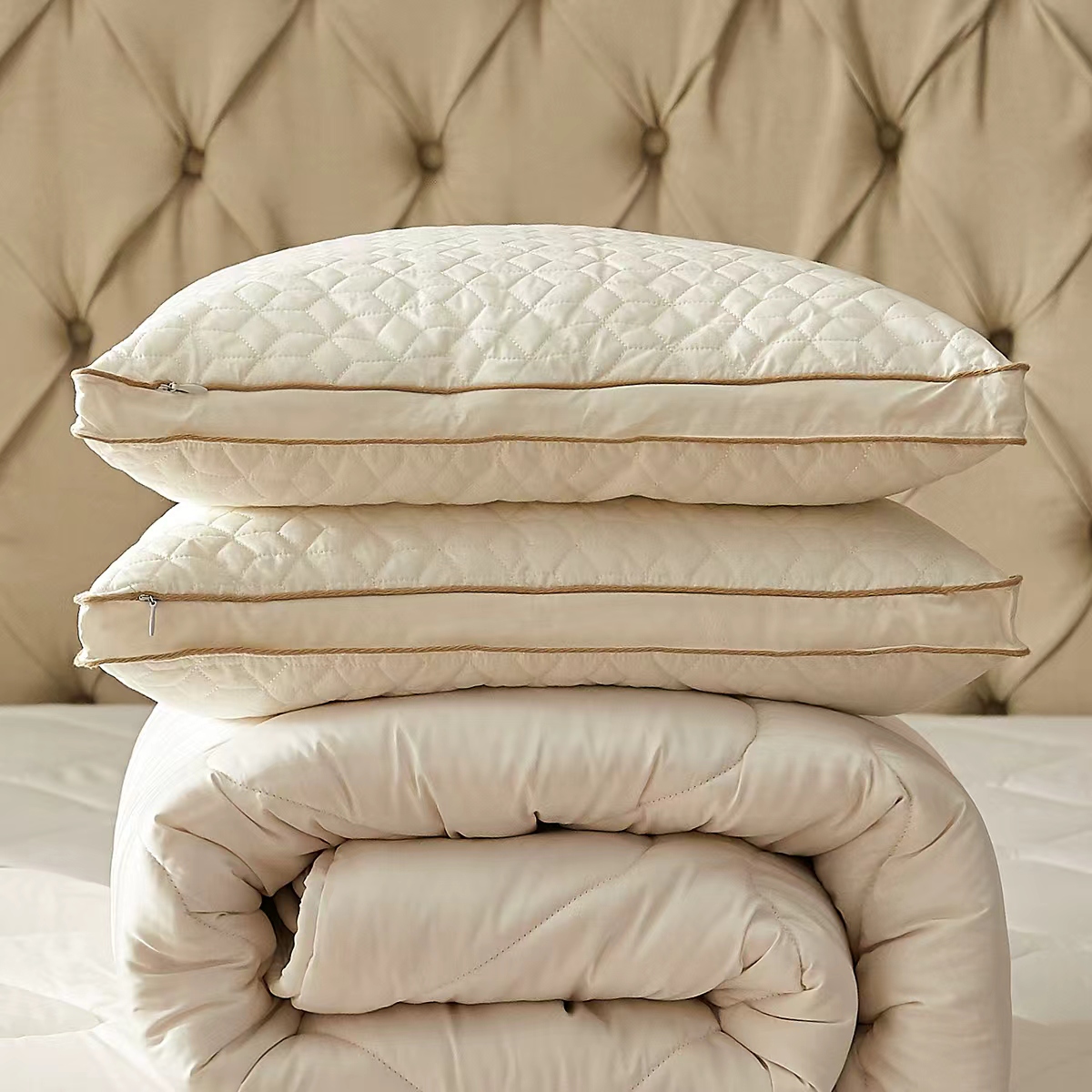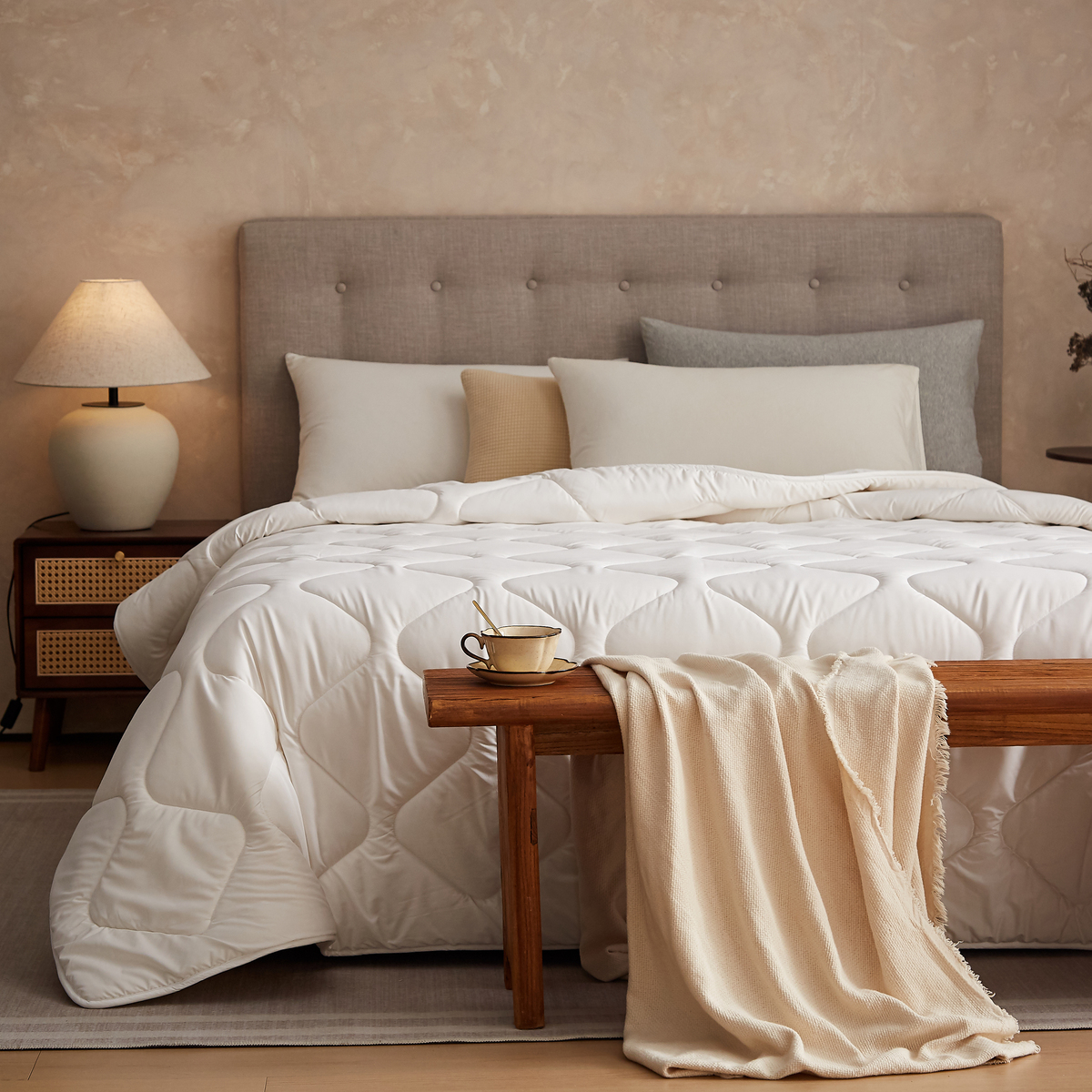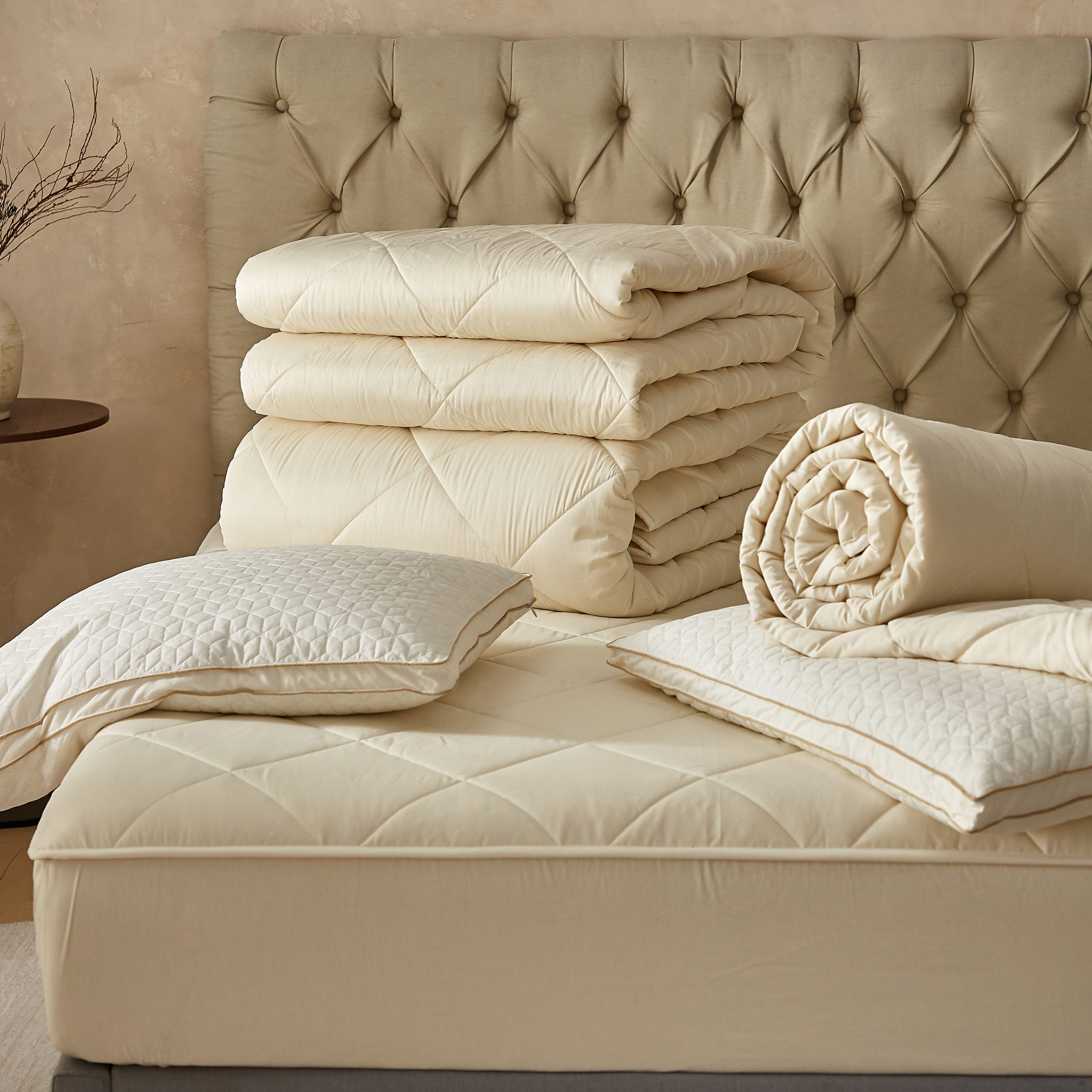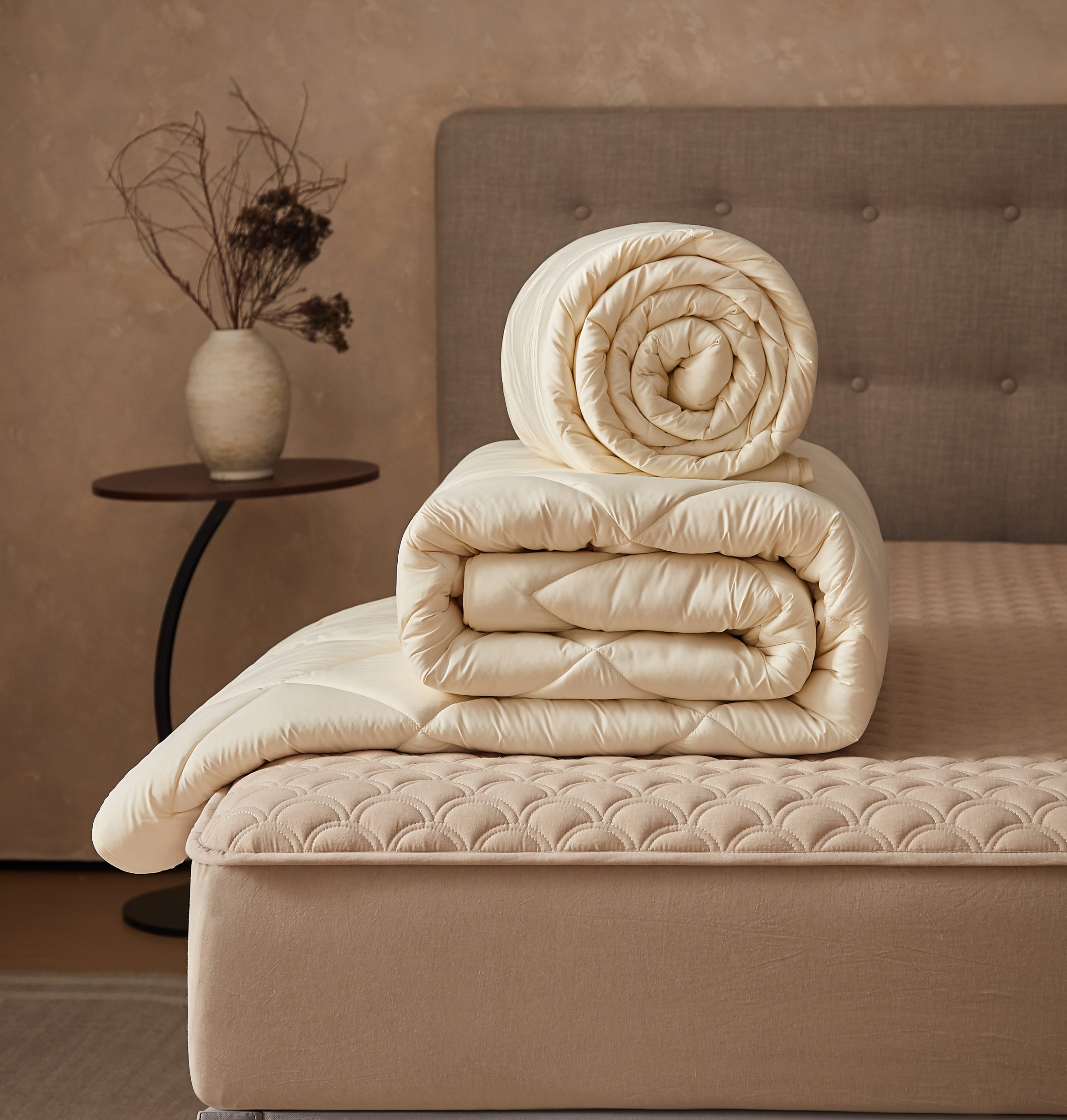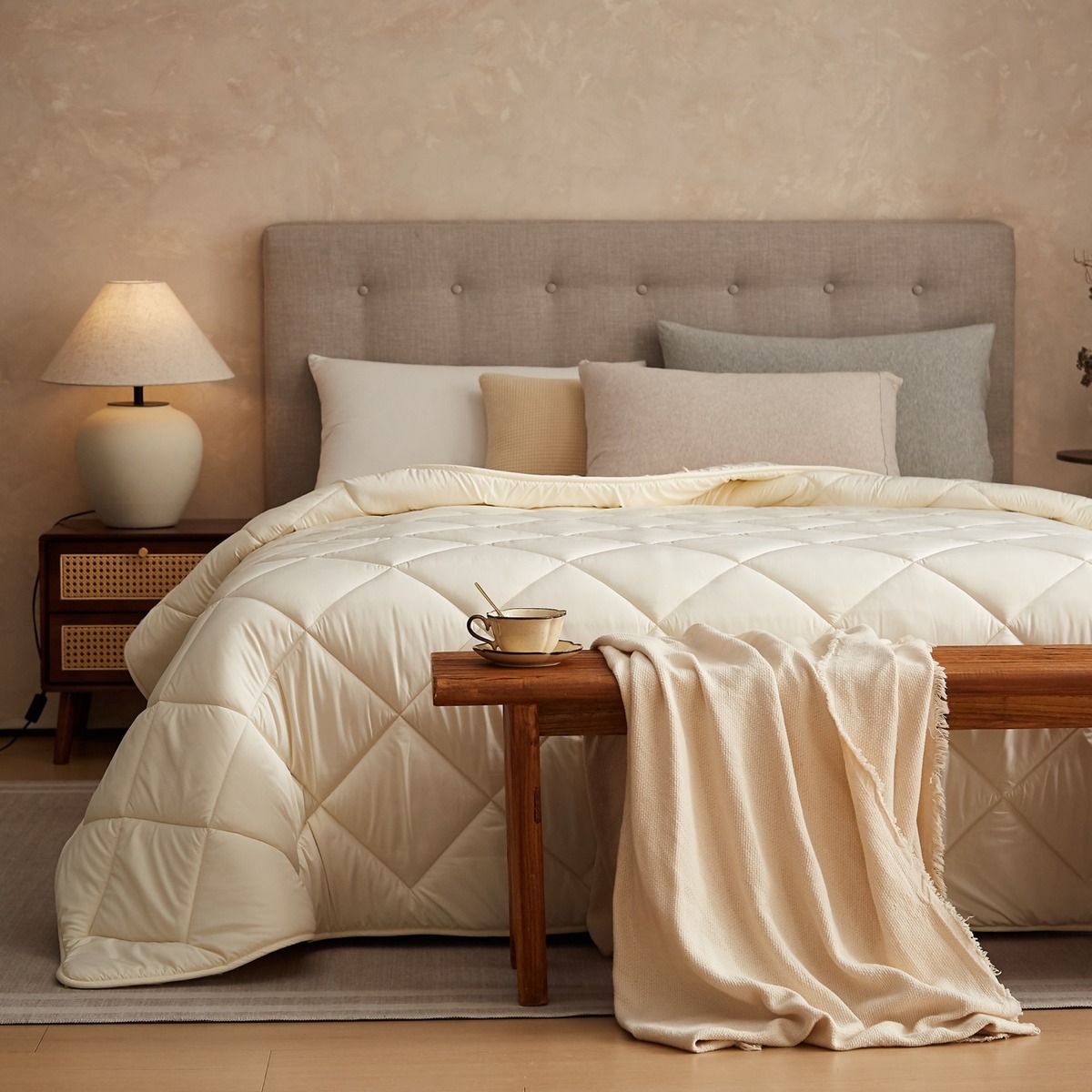

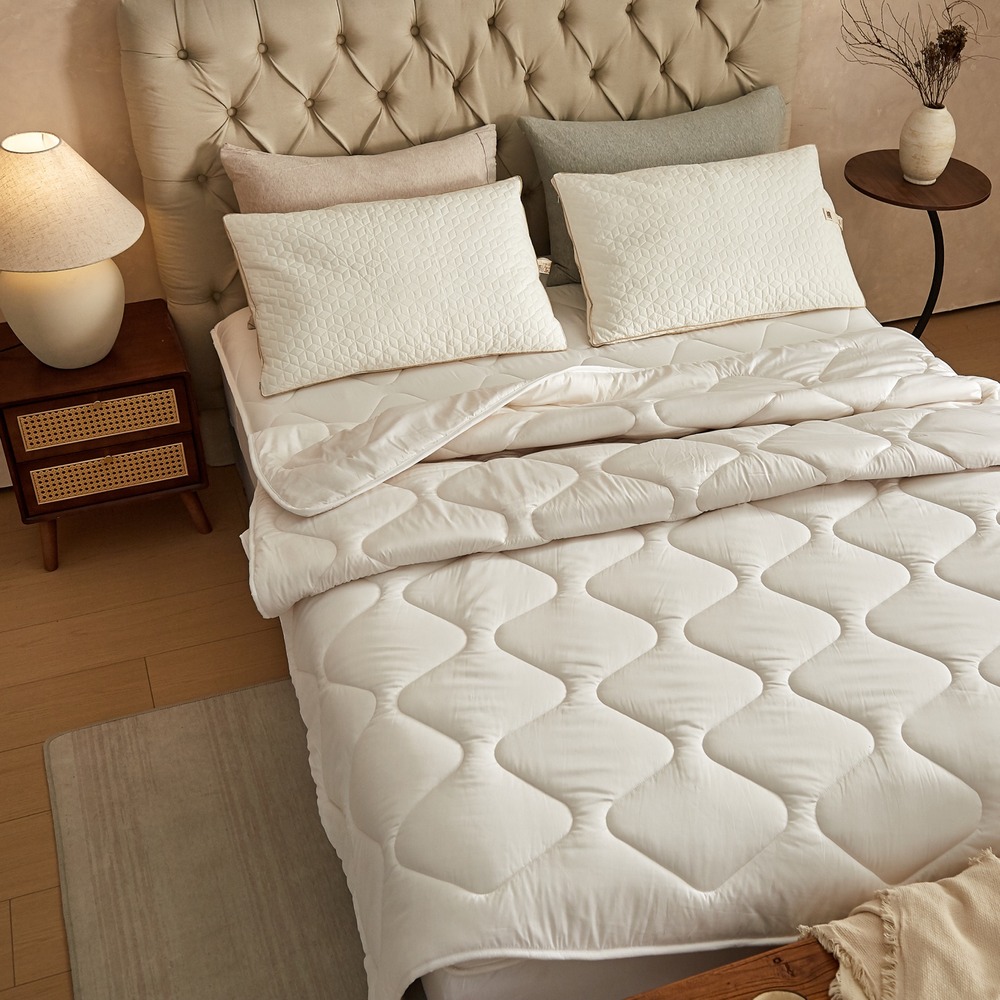
Choosing wool comforter filling weight is an important step in developing a bedding collection. It affects the amount of filling used, the finished product’s feel, material costs and intended warmth level.
For bedding brands, wholesalers and private-label buyers, the decision should start with the product brief: where the comforter will be sold, how it will be used and what customers expect from it.
Quick answer: specify wool filling weight in grams per square metre, or g/m², together with the finished size, filling composition and product construction. Use samples to evaluate the result before confirming a bulk order. Filling weight alone does not establish a finished comforter’s warmth rating.
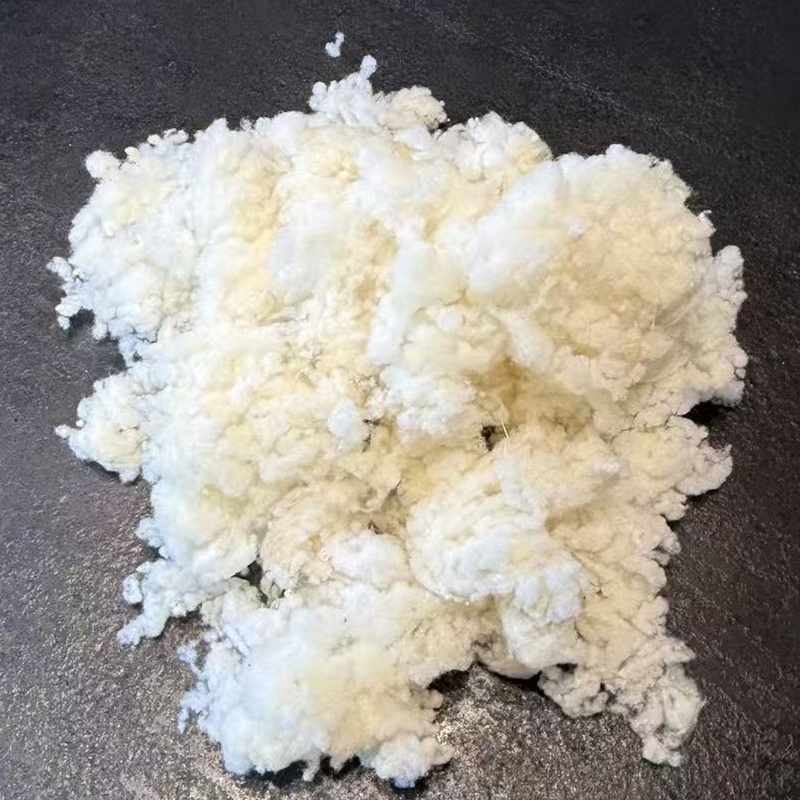
What Does Wool Comforter Filling Weight Mean?
Filling weight describes how much filling a comforter contains. Suppliers may express it in two different ways.
Filling Weight per Square Metre
Grams per square metre, written as g/m² or GSM, describes the amount of filling over a given area. For example, a specification of 300 g/m² wool filling means that each square metre contains a nominal 300 grams of filling.
Always identify which component the GSM figure refers to. Shell fabric also has a fabric weight, so a quotation that simply states “300 GSM” can be unclear.
Total Filling Weight
Total filling weight describes the amount of filling in one complete comforter. It is usually expressed in grams or kilograms. This figure changes with product size, even when the filling GSM stays the same. A larger comforter needs more filling to maintain the same weight per square metre.
Neither figure should be confused with the finished product’s total weight, which also includes the shell fabric and other components.
How to Calculate Total Filling Weight
For a rectangular comforter, buyers can use this calculation as a quotation estimate:
Total filling weight (g) = length (m) × width (m) × filling weight (g/m²)
| Specification | Illustrative value |
|---|---|
| Finished size | 200 × 230 cm |
| Area | 4.6 m² |
| Filling weight | 300 g/m² |
| Calculated total filling weight | 1,380 g |
This example explains the calculation; it is not a recommended warmth specification or an Aura Wool Home product specification.
For production, confirm the measurement basis and agreed tolerance with the supplier. The quotation and approved specification should state whether the filling figure is nominal and how it will be checked.
Does More Wool Always Mean a Warmer Comforter?
When other construction details remain comparable, increasing filling weight generally increases the amount of insulating material. However, buyers should not compare finished comforters using GSM alone.
Other relevant factors include:
- Wool filling composition and preparation
- Filling loft and compression
- Shell fabric construction
- Quilting pattern and density
- The duvet cover and other bedding used with the comforter
Wool can absorb and release moisture vapour, contributing to moisture management. The Woolmark Company explains this fibre property in its guide to wool’s natural breathability. Finished bedding performance still depends on the complete product.
Avoid assigning an exact TOG rating or bedroom temperature range from GSM alone. If your collection requires a stated thermal rating, arrange suitable finished-product testing.
Start with the Intended Sleeping Environment
Seasonal names such as “summer,” “all-season” and “winter” are useful collection labels, but they are not complete technical specifications.
A winter product intended for a heated bedroom may require a different construction from one intended for a colder sleeping environment. Regional climate is only part of the brief.
Before requesting a recommendation, identify:
- Target country or sales region
- Typical bedroom heating or air-conditioning
- Intended season
- Whether customers will use additional blankets
- Desired product feel and weight
These details give the manufacturer a clearer starting point for sample development.
Develop Distinct Options for Your Collection
Rather than choosing several filling weights with little practical difference, define the purpose of each product first.
| Product position | Development priority |
|---|---|
| Lightweight | Lower filling weight and a lighter finished feel |
| Midweight | A balance of filling weight, drape and intended warmth |
| Heavier weight | More filling for a warmer product brief, subject to evaluation |
These are development categories rather than universal GSM bands.
For a first collection, compare a small number of samples with clearly different filling weights. Keep the size, shell and quilting consistent so you can assess the effect of changing the filling.
Confirm Shell Fabric and Quilting Together
Filling weight should be selected alongside the rest of the construction.
The shell influences surface feel and drape, while quilting secures the filling and affects how the comforter bends and lies on the bed. Changing either may alter the finished feel, even when the filling GSM remains unchanged.
For a closer look at shell selection, read our Polyester vs Cotton Shell Wool Comforters: A B2B Buying Guide.
When comparing samples from different suppliers, check that the specifications are genuinely comparable before drawing conclusions from weight or price.
What to Include in a Wholesale Quotation Request
A clear brief helps suppliers prepare more relevant quotations and samples.
| Item | Information to provide |
|---|---|
| Product | Wool comforter or duvet insert |
| Market | Target country, sales channel and intended season |
| Size | Finished dimensions in centimetres |
| Filling | Required wool percentage and any blend components |
| Filling weight | Target g/m², or a request for sample options |
| Shell | Fibre composition and preferred fabric |
| Construction | Quilting pattern and edge finish |
| Branding | Brand label, care label and packaging |
| Quantity | Estimated order quantity by size and specification |
| Validation | Required testing and sample approval criteria |
If you have a reference product, explain what you want to retain or change. “A lighter version with the same shell and size” gives a clearer development direction than “a better all-season comforter.”
Review Samples Before Bulk Production
Use the sample stage to confirm both measurable specifications and the finished feel.
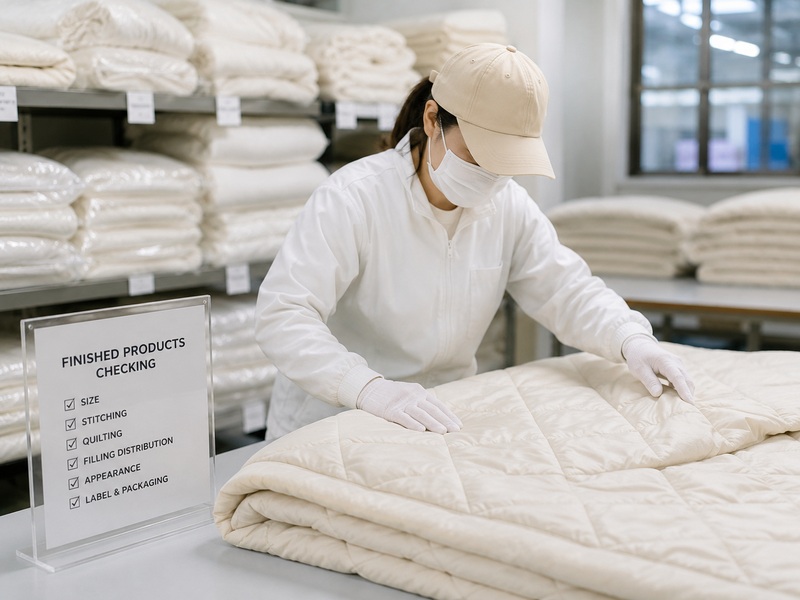
Check dimensions, filling distribution, quilting, drape, edge finishing and overall appearance. Agree on filling-weight tolerances and inspection methods before placing the bulk order.
Care instructions also need separate confirmation. A lower filling weight or a washable shell does not establish that the complete wool comforter is machine washable. Final care wording should reflect the materials, construction and relevant testing.
Keep an approved sample and specification sheet as references for production.
Frequently Asked Questions
Is 300 GSM the same as 300 grams of filling?
No. A filling specification of 300 g/m² describes weight per unit area. Total filling weight depends on the comforter’s dimensions.
Can different comforter sizes use the same filling GSM?
Yes. They can share the same nominal filling weight per square metre, while larger sizes contain more total filling.
What is the best filling weight for an all-season wool comforter?
There is no single figure suitable for every market. Start with the intended sleeping environment and product position, then evaluate samples before making a final selection.
Can GSM be converted directly into TOG?
There is no universal conversion. GSM measures weight per area; TOG describes thermal resistance. A claimed thermal rating needs an appropriate basis beyond filling weight.
Discuss Your Wool Comforter Specifications
Aura Wool Home supports custom wool bedding development, including size, shell fabric, filling weight, quilting, private label and packaging options.
To discuss your project, send your target market, finished sizes, intended season, estimated quantity and preferred shell fabric. If you have not selected a filling weight, include your reference product or desired product feel so suitable sample options can be discussed.
Learn more about our OEM wool bedding development process.
Send your requirements to info@aurawoolhome.com to discuss specifications and sample development.