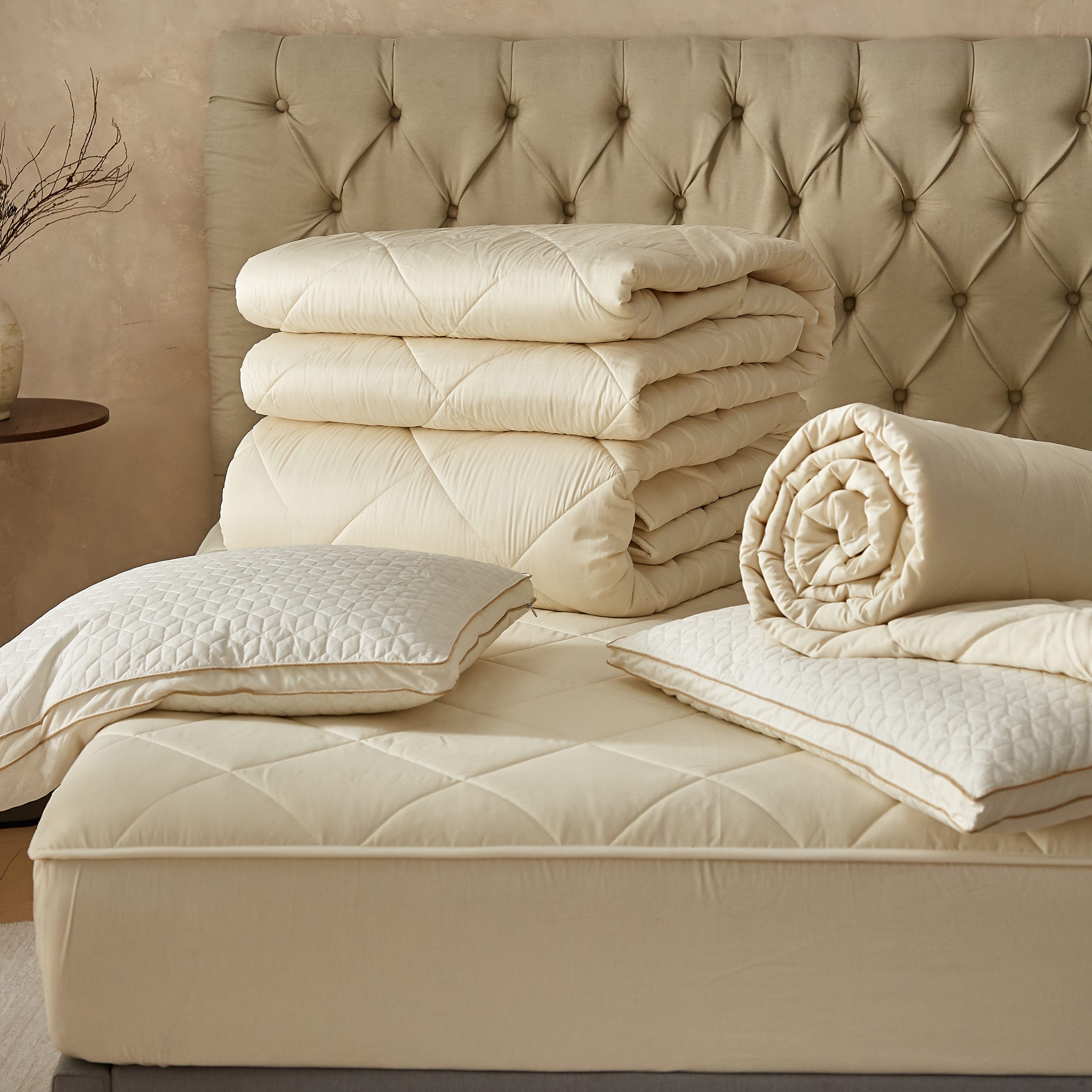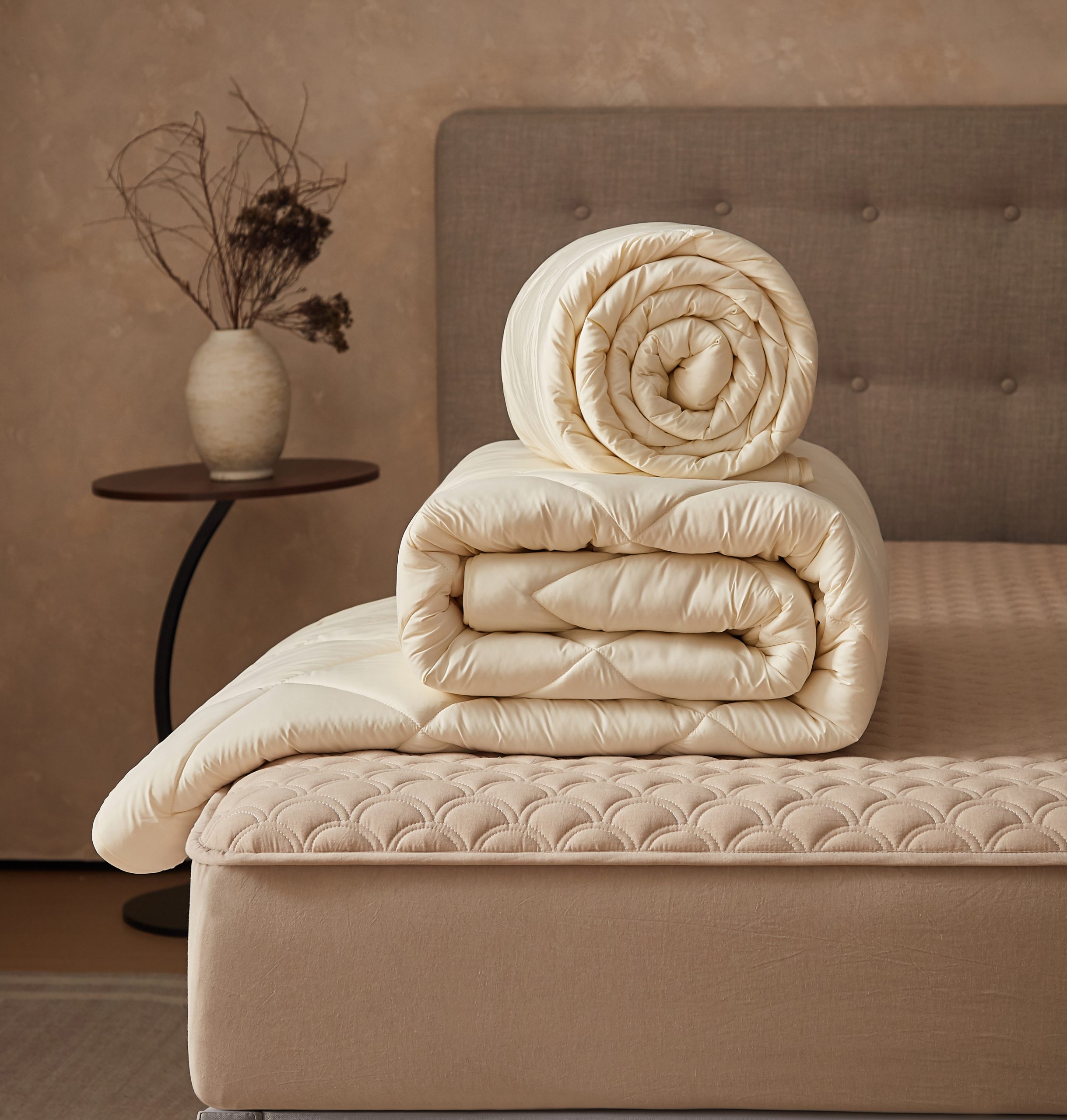




Polyester vs cotton wool comforter selection starts with the shell fabric. Choosing between a polyester shell and a cotton shell is one of the first specification decisions for a wool comforter program. Both products can use the same 100% natural wool filling, but the outer fabric changes the hand feel, durability, care requirements, price position and target market. This polyester vs cotton wool comforter guide explains the practical differences for bedding brands, wholesalers, retailers, hotels and distributors.
Quick answer: choose a polyester shell when your program prioritizes durability, easy care, stable color and cost control. Choose a cotton shell when natural hand feel, breathability and premium retail positioning are more important. For many buyers, the right choice depends on the sales channel rather than on one material being universally better.
What Does “Shell” Mean in a Wool Comforter?
A wool comforter has two main material systems: the shell fabric on the outside and the wool filling inside. The shell contains the filling, supports the quilting pattern and determines much of the product’s surface feel. The filling provides insulation and contributes to moisture and temperature management.
When comparing polyester and cotton options, buyers should keep the filling specification constant. A polyester shell wool comforter can still contain 100% natural wool. Likewise, a cotton shell does not automatically determine the wool grade, filling weight or warmth level. These items must be specified separately.
Polyester vs Cotton Wool Comforter: Quick Comparison
| Buying Factor | Polyester Shell | Cotton Shell |
|---|---|---|
| Surface feel | Smooth, consistent and customizable through fabric construction and finishing | Natural, familiar and often preferred for premium bedding |
| Durability | Generally strong resistance to abrasion and repeated handling | Good durability when the correct weave and fabric weight are selected |
| Care | Often easier to dry and less prone to wrinkling | May wrinkle more and requires care instructions matched to the fabric and filling |
| Cost position | Usually supports tighter cost targets and large-volume programs | Usually carries a higher material cost and premium positioning |
| Color consistency | Suitable for stable color programs and custom finishes | Natural appearance with good printing and dyeing options |
| Typical buyers | Hotels, value-to-mid retail, promotional programs and high-volume private label | Premium retail, natural bedding collections and brands emphasizing natural materials |
Advantages of a Polyester Shell Wool Comforter
1. Durable for Frequent Handling
Polyester fabrics can provide reliable strength for comforters that move through warehouses, retail displays, hotel operations or frequent household use. The final performance depends on the fabric weight, yarn, construction and finishing, so buyers should review a fabric sample rather than judging only by the fiber name.
2. Practical Care Performance
Polyester shells are often selected for faster drying, lower wrinkling and consistent appearance. This can be useful for hospitality and value-focused retail programs. However, care instructions must still account for the natural wool filling. A finished comforter should be tested as a complete product before washing claims are finalized.
3. Flexible Cost and Design Control
For larger OEM orders, polyester offers many choices in weight, weave, surface finish, color and quilting compatibility. It is often easier to develop a product around a target cost while maintaining a clean retail appearance. See our white polyester wool comforter as a reference for custom wholesale production.
Advantages of a Cotton Shell Wool Comforter
1. Natural Hand Feel
Cotton is familiar to bedding consumers and can support a soft, natural product story. Its touch varies by yarn count, weave, fabric weight and finishing. A good cotton shell should be selected together with the quilting design so the comforter remains flexible rather than stiff.
2. Premium Retail Positioning
Brands that emphasize natural materials often prefer cotton because both the shell and filling can be presented as natural fibers. This is especially relevant for premium home textile collections, specialty bedding stores and customers who closely evaluate fiber content.
3. Broad Fabric Options
Cotton shells can be developed in plain weave, sateen and other constructions, subject to the required downproof or filling-containment performance. Buyers can review our white cotton wool comforter for a premium natural-shell reference.
What Stays the Same: Natural Wool Filling
The shell fabric changes the surface and care profile, but the wool filling remains central to the product. Wool is naturally breathable and can absorb and release moisture vapor, helping bedding respond to changes in the sleep environment. The Woolmark Company provides additional research on wool breathability and thermal comfort.
For commercial specifications, filling weight should be selected by climate, season and target warmth level. A lightweight summer comforter and a warm winter comforter may use the same shell material but very different grams per square meter of wool.
Which Shell Is Better for Your Market?
- Hotels and hospitality: polyester may be preferred when durability, appearance retention and cost control lead the brief.
- Premium bedding brands: cotton may better support a natural-material story and a softer retail presentation.
- Wholesale distributors: offer both shell options to cover different price levels and customer preferences.
- Online retailers: match the shell to the product promise. Use cotton for a natural premium message and polyester for practical value and easy-care positioning.
- Private-label programs: compare approved samples using the same filling weight, size and quilting pattern before making the final decision.
Specifications to Confirm Before Ordering
A clear specification sheet prevents misunderstandings and makes quotations easier to compare. Before requesting a sample or price, confirm the following:
- Shell fiber content, construction, fabric weight, color and finishing
- Wool type, wool content and filling weight in g/m²
- Finished size and dimensional tolerance
- Quilting pattern, stitch density and edge finish
- Warmth level and intended season or climate
- Care label wording and required product testing
- Private label, wash label, hangtag and packaging requirements
- Sample quantity, order MOQ, production lead time and shipping terms
OEM / ODM Development Process
At Aura Wool Home, development starts with the buyer’s target market and product position. We then recommend shell fabric, wool filling weight, quilting and construction options. After the specification is confirmed, a sample can be prepared for checking before bulk production.
Our OEM / ODM support can include custom size, fabric selection, filling weight, quilting pattern, private label, care label and export packaging. Learn more about our custom wool bedding service.
Frequently Asked Questions
Is a polyester shell wool comforter still a natural wool product?
It can be described as a wool-filled comforter when the filling is natural wool, but the shell fiber should also be clearly disclosed. Accurate labeling would state the polyester shell content and the wool filling content separately.
Can filling weight and warmth level be customized?
Yes. Filling weight can be adjusted for summer, all-season or winter positioning, subject to the product construction and target market.
Can buyers provide their own fabric or reference sample?
Yes. Reference samples and specification sheets can be used during development. Material availability, minimum order quantities and testing requirements are confirmed before production.
Request a Material Comparison Sample
If you are deciding between polyester and cotton shells, send us your target size, filling weight, quantity, market and price level. We can recommend a suitable construction and prepare a sample plan for your wool comforter program.
Prepared by the Aura Wool Home bedding production team based on common buyer specification and sample-development discussions.